
CBD’s impact on REM sleep is minimal when used alone. Current research shows that pure CBD does not significantly alter the amount of time spent in REM sleep, the critical stage associated with vivid dreams, memory consolidation, and emotional processing. This stands in sharp contrast to THC-containing products, which research confirms can substantially reduce REM sleep duration by more than 30 minutes and delay its onset by over an hour.
This distinction matters because many people in the vaping and CBD community turn to cannabinoid products specifically for sleep support, yet the effects vary dramatically depending on what you’re actually using. If you’ve noticed changes in your dream patterns or sleep quality after starting CBD, the culprit is likely other compounds in your product rather than CBD itself.
What makes CBD’s relationship with REM sleep particularly interesting is how it works indirectly. Rather than directly suppressing or enhancing REM stages like THC does, CBD appears to improve overall sleep quality through anxiety reduction and anti-inflammatory pathways. Recent studies have even demonstrated that CBD can block anxiety-induced REM sleep suppression, potentially normalizing sleep architecture for those dealing with stress or worry.
The practical takeaway for anyone choosing between CBD vape products, tinctures, or full-spectrum options is straightforward: pure CBD formulations won’t mess with your REM cycles, but products containing THC absolutely will. Understanding this difference helps you make informed choices based on whether you’re chasing deep rest, managing anxiety, or simply trying to fall asleep faster without sacrificing dream sleep.
What REM Sleep Is and Why It Matters
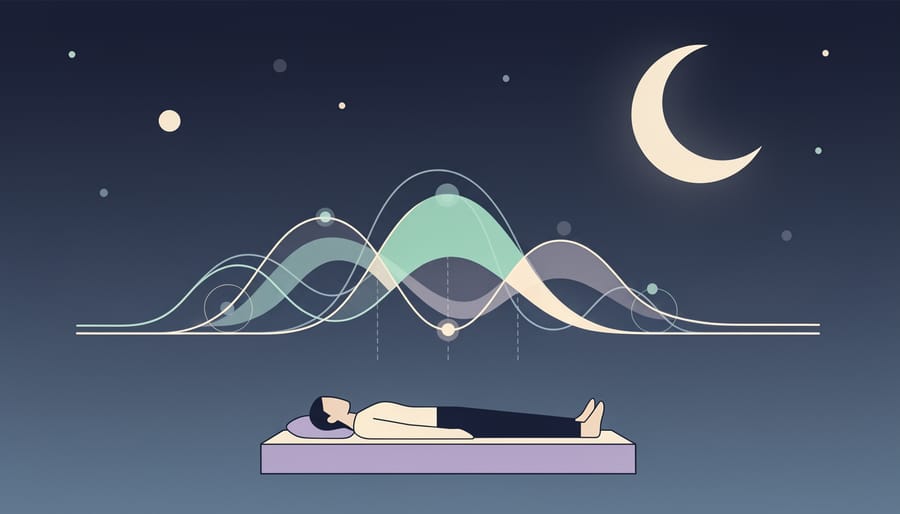
REM sleep stands for Rapid Eye Movement sleep, one of four distinct sleep stages your brain cycles through each night. During REM, your brain activity mirrors waking states while your body enters a temporary state of muscle paralysis that prevents you from acting out vivid dreams during REM. Most people first enter REM about 90 minutes after falling asleep, then cycle back into it roughly every 90 minutes throughout the night, with REM periods growing longer toward morning.
Understanding a few core terms helps clarify what happens during different sleep stages:
- REM Sleep
- The sleep stage marked by rapid eye movements, vivid dreaming, and intense brain activity despite muscle paralysis. Critical for emotional processing and memory consolidation.
- Non-REM Sleep
- Encompasses three progressively deeper sleep stages (N1, N2, N3) characterized by slower brain waves and physical restoration. Makes up about 75-80% of total sleep time.
- Sleep Latency
- The time it takes to fall asleep after lying down, or the time until entering a specific sleep stage like REM. Normal REM latency is 60-90 minutes.
- Delta Waves
- Slow, high-amplitude brain waves dominant during deep non-REM sleep (stage N3). Associated with physical recovery and immune system support.
- Sleep Spindles
- Brief bursts of brain activity during non-REM sleep that help consolidate memories and protect sleep from external disturbances.
REM sleep matters because it handles critical mental housekeeping. Your brain processes emotional experiences, consolidates memories from short-term to long-term storage, and appears to strengthen learning connections formed during waking hours. People deprived of REM often struggle with concentration, emotional regulation, and memory retention. Recent research shows CBD may protect REM sleep from anxiety-induced disruption while THC-containing products can reduce REM time by significant margins, making the distinction between product types essential for anyone using cannabinoids with sleep goals in mind.
How CBD Interacts with Sleep Architecture
CBD doesn’t work like a sleeping pill that knocks you out within an hour. Instead, it interacts with your body’s endocannabinoid system, a network of receptors that helps regulate everything from mood to inflammation to sleep-wake cycles. When you vape or consume CBD, it indirectly influences these receptors rather than binding directly to them, which explains why its effects feel subtler than THC’s immediate psychoactive impact.
The sleep benefits many users report stem primarily from CBD’s ability to reduce anxiety and calm an overactive nervous system. If racing thoughts or stress keep you awake, CBD may help by targeting the underlying tension rather than forcing drowsiness. Research shows it can block anxiety-induced REM sleep suppression, essentially protecting your sleep architecture when stress would otherwise disrupt it. This anxiolytic pathway differs fundamentally from sedatives that chemically induce sleep regardless of what’s keeping you awake.
Anti-inflammatory properties also play a role, particularly for people whose sleep suffers from chronic pain or physical discomfort. By reducing inflammation throughout the body, CBD may remove barriers to restful sleep rather than acting as a sleep aid in the traditional sense. This matters when choosing between CBD vs hemp oil since CBD isolates and broad-spectrum products contain higher concentrations of cannabidiol specifically.
Unlike THC, which binds to cannabinoid receptors and produces noticeable sedative effects alongside REM sleep reduction, CBD modulates the system without causing intoxication or dramatically altering sleep stages. Studies confirm that oral CBD administration can extend total sleep time and change the properties of non-REM oscillations like delta waves and sleep spindles, but it doesn’t suppress REM sleep the way THC-containing products do. You’re working with your body’s existing sleep mechanisms rather than overriding them.
Research Findings: CBD’s Effects on REM Sleep
CBD Alone vs. THC/CBD Combinations
The key difference lies in product formulation. Pure CBD products, whether isolate vapes, broad-spectrum oils, or CBD-only capsules, don’t significantly alter REM sleep duration or timing in most research. These products work through anxiety reduction and inflammation pathways rather than directly manipulating sleep stages, which explains why users often report better overall sleep quality without the grogginess or dream changes associated with traditional sleep medications.
Combination products tell a different story. Studies show that THC/CBD reduces REM sleep substantially, cutting REM time by roughly 34 minutes and delaying REM onset by over an hour. The THC component appears responsible for this effect, as it binds directly to cannabinoid receptors involved in sleep stage regulation.
For vapers choosing between product types, this matters practically. Full-spectrum CBD vapes contain trace THC (under 0.3% legally in many regions), which typically isn’t enough to produce significant REM changes. Broad-spectrum products remove THC entirely while preserving other cannabinoids and terpenes. CBD isolate vapes deliver pure cannabidiol with no other cannabis compounds.
If you’re using CBD specifically to address anxiety-related sleep disruption without altering your dream patterns or REM architecture, isolate or broad-spectrum products make the most sense. If you’re in a legal market and considering THC/CBD combinations for more potent sleep effects, understand you’ll likely experience reduced REM sleep and possibly fewer vivid dreams, an effect some users actually prefer when dealing with nightmares or trauma-related sleep issues.
The Anxiety-Sleep Connection
Anxiety doesn’t just affect your waking hours, it can seriously disrupt your sleep architecture, particularly REM stages. When stress levels spike, your body often responds by suppressing REM sleep, leaving you feeling mentally foggy even after a full night in bed. This is where CBD’s protective qualities come into play.
Research shows that CBD may not alter REM sleep directly, but it can block the REM suppression that anxiety triggers. Essentially, CBD acts as a buffer: it won’t manufacture extra REM sleep if you’re already sleeping well, but it can prevent stress from stealing the REM sleep you need. This mechanism works through CBD’s anxiolytic pathways, calming the nervous system without sedating you.
For vapers dealing with work stress or general anxiety, this protective effect matters. Many users report that CBD strains for anxiety help them maintain more consistent sleep patterns during stressful periods, even though they’re not experiencing the deep sedation of traditional sleep aids. The benefit isn’t about knocking yourself out, it’s about maintaining normal sleep cycles when your mind wants to keep racing.
Different Types of CBD Products and Sleep Applications
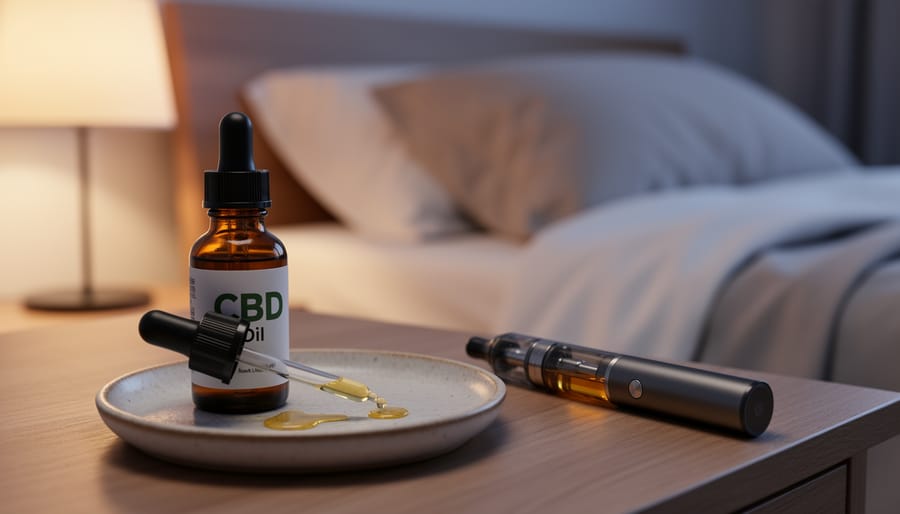
CBD delivery methods vary considerably in how they affect sleep timing and duration, making product selection an important consideration for sleep support. Understanding these differences helps users choose options that align with their sleep schedules and goals.
Vaping offers the fastest onset, with effects typically felt within 5-10 minutes. This makes it useful for addressing immediate sleep obstacles like racing thoughts at bedtime, though effects generally last 2-3 hours. Users who buy hemp-derived CBD vapes for sleep often use them 15-30 minutes before bed to take advantage of this quick action. The shorter duration means vaping alone may not maintain effects through an entire sleep cycle, but it can facilitate falling asleep.
CBD oils and tinctures taken sublingually begin working in 15-45 minutes and last 4-6 hours, offering a middle ground. This duration better covers a full night’s sleep, making oils popular for overall sleep maintenance rather than just initial onset. Taking them 30-60 minutes before bed allows levels to peak as you settle in.
Edibles and capsules show the slowest onset at 60-90 minutes but provide the longest duration, typically 6-8 hours. This extended window makes them suitable for users primarily concerned with staying asleep rather than falling asleep. The trade-off is requiring earlier administration, often 90 minutes before bedtime.
Formulation matters as much as delivery method. Full-spectrum products containing trace THC may influence REM sleep differently than CBD isolates, as research shows THC/CBD combinations significantly reduce REM duration. Broad-spectrum products offer middle-ground options, containing multiple cannabinoids without THC. Timing your chosen product correctly ensures CBD levels align with your sleep window rather than peaking hours before or after.
Practical Considerations for CBD Users
If you’re considering CBD for sleep support, start with the right CBD dosage for your body weight and tolerance level, typically between 10-40 mg for sleep applications. Many users find success taking CBD 30-60 minutes before bed, though vaping offers faster onset compared to oils or edibles that require digestive processing.
Product selection matters more than many realize. CBD isolates contain only cannabidiol, while full-spectrum products include trace amounts of other cannabinoids and terpenes. If your goal is purely sleep support without REM sleep alteration, isolates or broad-spectrum products (THC-free) align better with research showing CBD alone doesn’t significantly change REM sleep. Full-spectrum products containing THC may reduce REM sleep duration and increase REM latency, which isn’t necessarily harmful but differs from CBD-only effects.
Set realistic expectations: CBD’s sleep benefits work primarily through anxiety reduction and inflammation management rather than direct sedation or REM manipulation. You might experience easier sleep onset and better overall rest quality without dramatic changes to dream patterns or sleep architecture. Some users notice benefits within days, while others require two to three weeks of consistent use.
Track your sleep quality, daytime alertness, and any changes in dream recall to assess whether CBD is working for your specific needs. Different delivery methods and formulations produce varying results between individuals.
Common Questions About CBD and REM Sleep
CBD users often have specific questions about how cannabidiol interacts with sleep architecture. These common queries reflect real concerns about choosing products and understanding what to expect when using CBD for sleep support.
Does CBD actually help with sleep overall?
CBD may improve sleep quality primarily through anxiety reduction and anti-inflammatory effects rather than direct sedation. Research shows CBD extended overall sleep periods and modified non-REM sleep oscillations, suggesting it works through different pathways than traditional sleep medications.
Should I be concerned about REM sleep reduction from THC/CBD products?
THC/CBD combinations significantly decreased REM sleep time by roughly 34 minutes and increased the time before REM onset in research settings. While some REM reduction occurs with many sleep aids, long-term effects remain under study, and CBD-only products don’t show this same REM suppression.
Can CBD improve dream recall or change dreaming patterns?
CBD alone doesn’t significantly alter REM sleep, the stage most associated with vivid dreaming. Users switching from THC-containing products to pure CBD may actually notice increased dream activity as REM sleep normalizes.
Does tolerance to CBD affect its sleep benefits over time?
Current research doesn’t show the same tolerance development with CBD that occurs with some cannabinoids, though individual responses vary. Users report more consistent sleep support with CBD compared to compounds that directly suppress REM sleep.
The distinction between CBD isolate and full-spectrum products matters significantly for sleep applications. If your primary concern is avoiding REM sleep suppression while gaining anxiety-relief benefits, CBD-only vape products or broad-spectrum options without THC align better with research findings. Those using full-spectrum products containing THC should weigh the overall sleep extension benefits against potential REM stage changes. Traditional sleep medications often suppress REM sleep more dramatically than CBD-only products, positioning pure CBD as a gentler option for sleep support without major sleep architecture disruption.
The relationship between CBD and REM sleep is more nuanced than a simple yes or no answer. Current research shows that CBD alone doesn’t significantly alter REM sleep duration or structure, and in fact may protect against anxiety-induced REM sleep suppression through its anxiolytic and anti-inflammatory mechanisms. This means CBD’s sleep benefits work differently than you might expect, not by changing your dream sleep directly, but by addressing underlying factors like stress and inflammation that disrupt your rest.
The picture changes with THC/CBD combinations, which research shows can significantly decrease time spent in REM sleep and increase the latency to reach this stage. Pure CBD products also extend overall sleep duration while changing the properties of non-REM sleep oscillations, including delta waves, spindles, and ripples.
Whether you’re vaping CBD isolate before bed or considering a full-spectrum product, understanding these distinctions helps you choose what aligns with your sleep goals. We’d love to hear from the community about your experiences with CBD and sleep quality, what’s worked for you, and have you noticed any differences between CBD-only and combination products?