
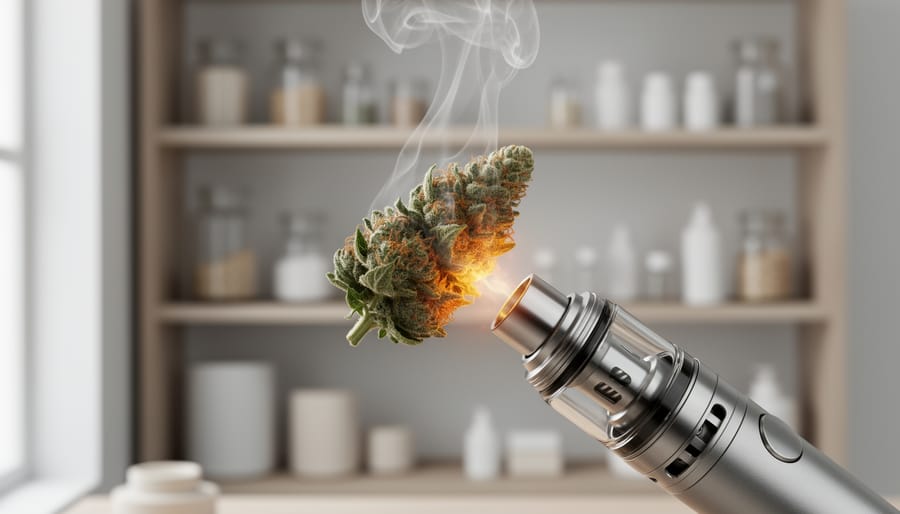
THCa decarboxylation is the heat-activated chemical process that transforms tetrahydrocannabinolic acid (THCa), a non-intoxicating compound found in raw cannabis, into active THC when you vape. This conversion happens the moment your vape pen heats the material, fundamentally changing what enters your system and how you experience the effects.
Understanding this process matters more than many vapers realize, especially if you’re exploring best THCA carts or trying to make informed choices about your CBD and cannabis products. The temperature your device reaches determines not just whether decarboxylation occurs, but how efficiently it happens and what compounds you ultimately inhale.
Here’s the practical reality: when you purchase a product labeled as THCa, you’re buying something that becomes psychoactive THC once heated. Many users assume CBD and THCa products are interchangeable or equally non-intoxicating, but that assumption misses the critical role of heat. CBD doesn’t require decarboxylation to be active and won’t make you high regardless of temperature, while THCa undergoes a complete molecular transformation the second your vape coil fires up.
This article breaks down exactly what happens during decarboxylation, how different vaping temperatures affect the process, and what you need to know to control your experience. Whether you’re managing the psychoactive effects or maximizing therapeutic benefits, understanding the science behind the vapor gives you real control over your results.
What Is THCa and Why Does It Matter for Vapers?
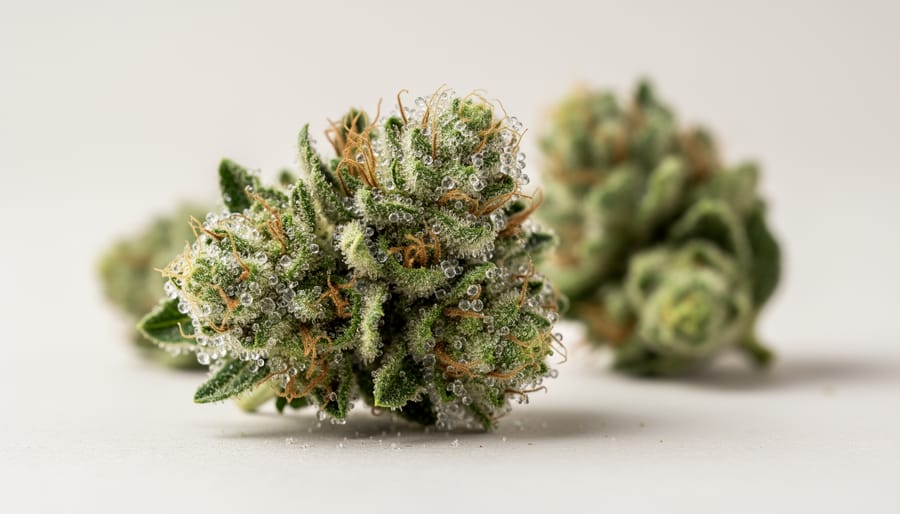
THCa stands for tetrahydrocannabinolic acid, the chemical compound that exists in raw, unheated cannabis plants. Unlike THC, which produces the intoxicating effects cannabis is known for, THCa won’t get you high in its natural state. It’s the precursor molecule that becomes THC only when you apply heat, which is exactly what happens when you vape.
You’ll find THCa in fresh cannabis flowers, concentrates, and some full-spectrum CBD products. The plant produces it naturally as part of its growth cycle, and it remains in this acidic form until heat, light, or time gradually converts it. When you look at lab reports for cannabis or CBD products, you’ll often see both THCa and THC percentages listed separately, reflecting what’s in the raw material versus what’s been activated.
- THCa (Tetrahydrocannabinolic Acid)
- The non-intoxicating precursor to THC found in raw cannabis plants. It converts to THC through heat, light, or aging.
- THC (Tetrahydrocannabinol)
- The primary intoxicating cannabinoid in cannabis, created when THCa loses its carboxyl group through decarboxylation.
- CBD (Cannabidiol)
- A non-intoxicating cannabinoid that comes from CBDa (cannabidiolic acid) and doesn’t produce a high. Many CBD products also contain trace amounts of THCa.
- Cannabinoids
- Chemical compounds found in cannabis that interact with receptors in the human body. Both acidic (like THCa) and neutral (like THC) forms exist.
- Acidic Cannabinoids
- The raw forms of cannabinoids with a carboxyl group attached, such as THCa and CBDa. They’re non-intoxicating until heat removes the acid group.
For vapers, this matters because your device is constantly converting THCa to THC during each session. Even if you’re primarily interested in CBD vaping, many full-spectrum products contain small amounts of THCa that will activate when heated. Understanding this conversion helps you predict effects, choose appropriate temperatures, and interpret product labels accurately. Some people specifically seek out THCa-rich products for their potential wellness benefits before conversion, while others want to ensure complete activation for maximum THC effects.
The key takeaway: THCa is everywhere in cannabis products, and your vaporizer transforms it the moment you heat your material.
How Decarboxylation Works: The Science Behind the Heat
Temperature and Time: The Critical Variables
Temperature and time work together to control how efficiently THCa converts to THC when you vape. Most cannabinoid decarboxylation happens between 220°F and 250°F (105°C to 120°C), but the sweet spot depends on how long your material stays at that temperature.
Lower temperatures around 315°F (157°C) require longer exposure times to fully decarboxylate THCa. This slower conversion preserves more terpenes and creates smoother vapor, but you need multiple draws from the same material to complete the process. Higher temperatures near 400°F (204°C) trigger almost instant decarboxylation in seconds, producing stronger effects faster but potentially degrading delicate compounds.
For vaping, exposure time means how long your device heats the material during each session. Session-style vapes that maintain consistent heat for 5-10 minutes allow for thorough, gradual decarboxylation even at moderate temperatures. On-demand vapes that heat only during your draw require higher temperatures to convert THCa in the brief seconds you inhale.
Most vaporizers reach optimal decarboxylation between 350°F and 390°F (175°C to 200°C). Starting at the lower end and gradually increasing temperature through your session maximizes conversion while minimizing degradation. Watch for diminishing vapor production as a sign that available THCa has been converted.
Understanding this relationship helps you dial in your device settings to match your desired experience and make the most of your material.
Types of Decarboxylation in Vaping
Decarboxylation happens at three distinct stages in the vaping journey, and knowing when it occurs helps you understand what’s really in your device and what effects you’ll experience.
The most familiar type is instant decarboxylation, which happens the moment you press the button on your vape. When the heating element reaches operational temperature, THCa molecules in your material convert to THC within seconds. This real-time transformation is what vaporizers enable decarboxylation so effectively, the heat is applied directly to the cannabinoids you’re about to inhale. Dry herb vapes and concentrate pens rely almost entirely on this on-demand conversion, meaning the THCa remains inactive until you actually use the device.
Many commercial products undergo pre-decarboxylation during manufacturing. Vape cartridges, distillates, and certain concentrates are heated during production to convert THCa before they reach consumers. This processing step standardizes potency, extends shelf life, and ensures the cannabinoids are already activated when you vape. Products labeled with THC percentages (rather than THCa) have typically been through this pre-processing stage.
Partial decarboxylation occurs gradually through storage and handling, even without intentional heating. Exposure to light, moderate warmth, and time slowly converts small amounts of THCa to THC. While this natural degradation happens at a much slower rate than vaping or manufacturing processes, it’s why proper storage matters for maintaining your product’s intended cannabinoid profile.
- Real-time decarboxylation during active vaping sessions
- Pre-processing decarboxylation by manufacturers before packaging
- Gradual natural decarboxylation through storage and environmental exposure
- Low-temperature methods that preserve terpenes while converting cannabinoids
- High-temperature methods that prioritize speed and complete conversion
Understanding these different pathways helps you make smarter choices about which products suit your needs and how to store them properly between sessions.
How Vaping Devices Decarboxylate THCa
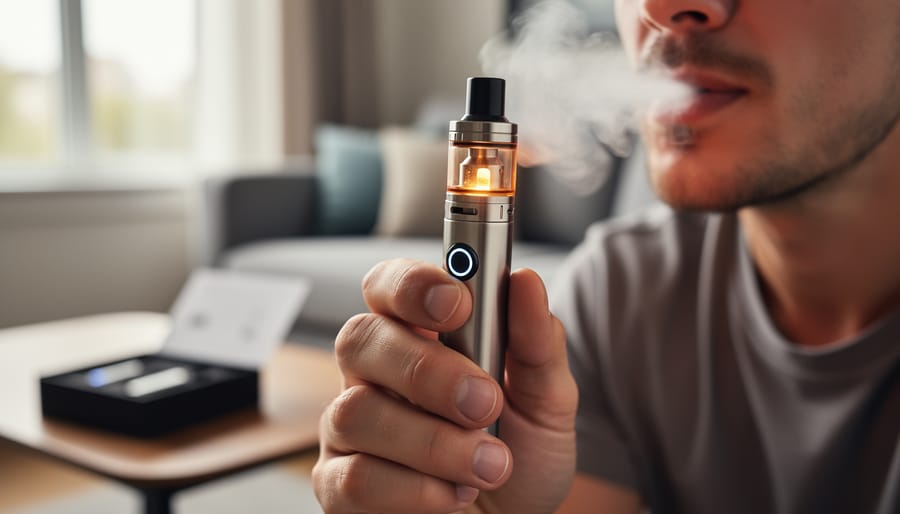
Different vaping devices decarboxylate THCa through distinct mechanisms, and understanding these differences helps you optimize your vaping experience and results.
Dry herb vaporizers use conduction, convection, or hybrid heating to decarboxylate THCa in real-time. Conduction models heat cannabis flower through direct contact with a heated chamber, creating decarboxylation within 15-30 seconds at the contact surface. Convection vaporizers pass hot air through the material, providing more even decarboxylation throughout the chamber but requiring slightly longer heat-up times. The chamber design matters significantly: ceramic chambers distribute heat gradually and evenly, while metal chambers heat faster but may create hot spots that over-decarboxylate some material while leaving other portions under-converted.
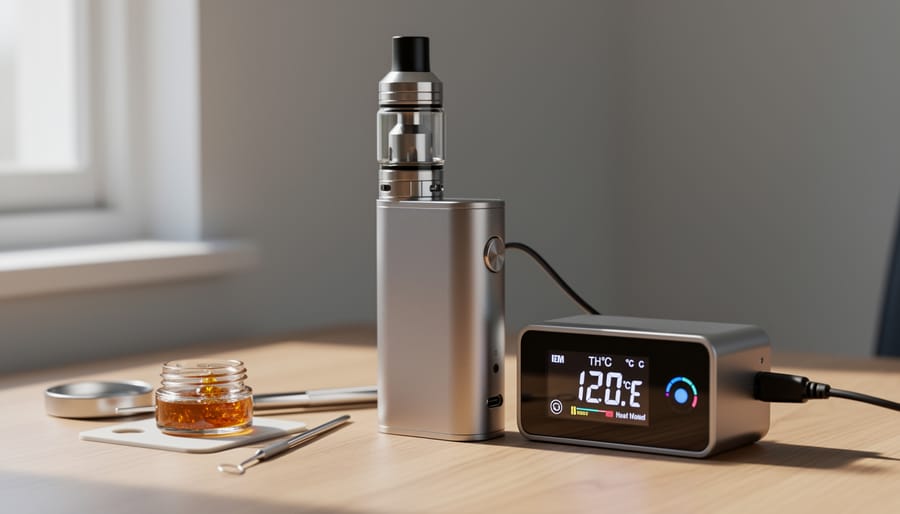
Concentrate pens deliver rapid, intense heat directly to THCa-rich extracts. These devices typically use coil-based heating elements (quartz, ceramic, or titanium) that reach decarboxylation temperatures in seconds. The concentrated nature of the material means decarboxylation happens almost instantly when the coil activates. Quartz coils heat fastest but cool quickly, while ceramic coils provide steadier temperatures that may decarboxylate more thoroughly. When you choose the right battery for your concentrate pen, you’re directly influencing how efficiently decarboxylation occurs, since voltage settings control the coil temperature.
Cartridge vapes contain pre-filled oil where some decarboxylation often occurred during manufacturing, but additional conversion happens when you vape. These devices use lower, more controlled temperatures than concentrate pens. The heating element warms the oil, and decarboxylation continues throughout the session. Most cartridge batteries offer variable voltage, letting you adjust how aggressively decarboxylation proceeds with each draw.
Airflow plays a crucial role across all device types. When you inhale, cooler air enters the chamber, temporarily dropping temperature and potentially slowing decarboxylation. Devices with restricted airflow maintain higher chamber temperatures, promoting more complete conversion. Conversely, wide-open airflow cools the material faster, which can preserve terpenes but may result in less thorough decarboxylation. This explains why long, slow draws often produce stronger effects than quick puffs, the sustained heat exposure allows more complete THCa conversion.
THCa vs. CBD: What Vapers Need to Know
Many vapers assume CBD and THCa are completely separate compounds, but they often coexist in the same products. CBD (cannabidiol) is a distinct cannabinoid that doesn’t convert from THCa and remains stable when heated. It provides its own therapeutic effects without causing intoxication. THCa, by contrast, transforms into psychoactive THC when you vape it.
Full-spectrum CBD products frequently contain trace amounts of THCa alongside CBD, terpenes, and other cannabinoids. When you vape these products, any THCa present undergoes decarboxylation, converting to THC in your vapor. The amount is typically minimal (under 0.3% THC by law in most regions), but it’s worth understanding if you’re concerned about THC intake or drug testing.
The decarboxylation process doesn’t affect CBD itself. Whether you vape at 350°F or 425°F, CBD remains CBD. However, the temperature does influence which cannabinoids vaporize and at what rate. Lower temperatures (320-356°F) favor CBD and terpene preservation, while higher temperatures (around 392°F) more efficiently convert any THCa present into active THC.
This distinction matters when choosing products. If you want pure CBD without any THC conversion, look for CBD isolate or broad-spectrum formulations specifically labeled as THC-free. Understanding the difference between CBD vs hemp oil also helps you identify what’s actually in your vape cartridge.
For those seeking the entourage effect, full-spectrum products containing THCa may offer enhanced benefits once that THCa converts during vaping. The synergy between CBD, converted THC, and other cannabinoids can create a more comprehensive experience than CBD alone.
Practical Applications: When and Why Decarboxylation Matters
Understanding decarboxylation transforms from chemistry theory into practical advantage when you’re standing in a dispensary or adjusting your device settings. Here’s where this knowledge directly impacts your vaping experience.
Temperature control becomes far more intentional when you understand the process. Set your vaporizer below 220°F and you’ll preserve THCa in its raw form, useful if you want the potential anti-inflammatory benefits without psychoactive effects. Between 220-250°F, you’re hitting the sweet spot for efficient decarboxylation while preserving terpenes and flavor. Push above 400°F and you’re not just decarboxylating, you’re degrading cannabinoids and creating harsher vapor.
Product selection makes more sense too. Those “raw” or “live” cannabis products contain mostly THCa, requiring heat activation during vaping. Pre-activated or “decarbed” concentrates have already undergone heat treatment, offering more predictable potency but potentially less flavor complexity. If you’re calculating CBD dosage with full-spectrum products, remember that the THCa content listed converts during vaping, a cartridge showing 80% THCa yields roughly 70% THC after accounting for molecular weight loss.
Reading labels becomes clearer. A concentrate listing “THCa: 85%, THC: 2%” tells you it’s minimally activated, you’ll convert that THCa during use. One showing “THC: 75%, THCa: 5%” has been pre-decarboxylated. This affects not just potency predictions but also how the product tastes and feels.
For medical users, decarboxylation timing matters significantly. Some research suggests raw THCa offers distinct anti-nausea and neuroprotective properties that disappear after conversion. Lower-temperature vaping preserves more of these raw cannabinoids alongside activated ones, creating a different effect profile than high-heat sessions that fully convert everything.
Common Questions About THCa Decarboxylation
Can you vape raw THCa? Yes, but it won’t produce the effects most people associate with THC. Raw THCa passes through your vape without converting unless your device reaches the necessary temperatures, typically above 220°F. If you’re using one of the top vapes with precise temperature control, you’ll need to set it properly to activate the compound.
Does decarboxylation happen in all vapes?
Most modern vapes generate enough heat to decarboxylate THCa, but cheap or malfunctioning devices may not reach the required temperatures. Combustion-style devices always trigger decarboxylation, while low-temperature dab pens might only partially convert THCa.
How do you know if THCa is fully converted?
You can’t see the conversion happen, but you’ll notice the effects. Full decarboxylation produces the characteristic psychoactive or therapeutic effects of activated THC, while incomplete conversion results in weaker, less consistent experiences.
What happens if the temperature is too high?
Excessive heat degrades THC into CBN, a different cannabinoid that produces sedative effects rather than the typical THC experience. High temperatures also burn terpenes, creating harsh vapor with unpleasant flavors and potentially irritating your throat.
Does decarboxylation affect flavor?
Absolutely. The process releases terpenes that create the taste and aroma profiles vapers enjoy, but over-decarboxylation destroys these delicate compounds. Finding the right temperature balance preserves flavor while still activating cannabinoids effectively.
The conversion efficiency matters more than you might think. Partial decarboxylation leaves you with a mix of THCa and THC, which some users prefer for a more balanced cannabinoid profile. Others want complete conversion for maximum potency and predictable effects. Your device’s consistency plays a huge role here, uneven heating creates hot spots that over-convert some material while leaving other portions raw.
Temperature stability is another factor community members often overlook. Devices that fluctuate during a session produce inconsistent decarboxylation, leading to unpredictable experiences. This is why seasoned vapers emphasize proper device maintenance and understanding your specific model’s heating characteristics rather than just following generic temperature guidelines.
Understanding THCa decarboxylation gives you real control over your vaping experience. This heat-activated conversion from THCa to THC happens every time you vape, transforming non-intoxicating cannabinoids into their active forms. When you grasp how temperature and time affect this process, you can fine-tune your device settings to achieve your desired effects, whether you’re after maximum potency, balanced cannabinoid profiles, or preserved terpene flavor.
The knowledge helps you make smarter purchasing decisions too. You’ll recognize when you’re buying pre-activated products versus raw concentrates, understand what temperature ranges your device needs to hit, and decode product labels with confidence. For CBD vapers working with full-spectrum products, understanding decarboxylation clarifies why certain batches feel different and how heating affects the entourage effect.
Every device and product combination creates unique decarboxylation patterns. What temperature settings work best for your dry herb vaporizer? How does your preferred cartridge compare to concentrates? We’d love to hear what you’ve learned through experimentation. Share your experiences in the comments, your insights help fellow community members optimize their own vaping practice and discover new approaches to temperature control and product selection.